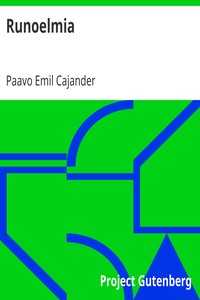
Runoelmia by Paavo Emil Cajander
Let's be clear from the start: 'Runoelmia' is not a book with a plot. You won't find chasing villains or twisting love stories here. It's a collection of poems by Paavo Emil Cajander, a Finnish poet and translator who lived from 1846 to 1913. Think of it less as a story and more as a window into a specific time and place—Finland during a period of intense national awakening.
The Story
There's no single narrative thread. Instead, the 'story' is the cultural moment itself. Cajander was a key figure in the Finnish language movement. At the time, educated Finns often spoke Swedish. Cajander's life's work, reflected in this collection, was about proving that Finnish was a language capable of great beauty and deep expression, worthy of literature and national pride. His poems often draw on nature, folklore, and a sense of longing—themes central to Finnish identity. Reading them, you follow the emotional journey of a people defining themselves.
Why You Should Read It
I'll be honest, some of the poems feel of their time—quiet, formal, reflective. But that's also their power. You get a sense of a thoughtful, careful voice trying to build something meaningful. It's not explosive passion; it's the steady work of laying a foundation. For me, the most fascinating part was reading this alongside the knowledge of his translations. It made his original poems feel like practice, or like companion pieces, to the monumental task of bringing world literature into Finnish. You appreciate the craft and the quiet patriotism in every line.
Final Verdict
This book is a niche treasure. It's perfect for readers curious about Nordic history, poetry enthusiasts interested in national literary movements, or anyone with Finnish heritage looking to connect with the intellectual roots of their culture. It's not a breezy read, but a contemplative one. If you approach it as a historical document and a labor of love, rather than a page-turner, you'll find a quiet, resonant voice from the past that helped a nation find its own.
You are viewing a work that belongs to the global public domain. It serves as a testament to our shared literary heritage.