1

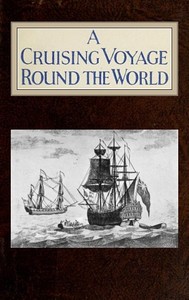
A Cruising Voyage Around the World — Inside the Classic
(0 User reviews)
47
Project Gutenberg
2017
Not confirmed
Voyages around the world -- Early works to 1800; Latin America -- Description and travel -- Early works to 1800; Privateering -- Early works to 1800; Selkirk, Alexander, 1676-1721
Readers of public-domain and historical texts
Project Gutenberg digital edition
en
Edition facts
Words
164,343
Reading time
715 min
Text sections
23
Before opening A Cruising Voyage Around the World — Inside the Classic, the edition data offers a quick orientation: 164,343 words, 11 hr 55 min estimated reading time, and 23 detected text sections.
The text analysis averages about 26.6 words per sentence, while the detected sections provide another way to judge how the source is divided.
Project Gutenberg metadata also associates the work with “Voyages around the world -- Early works to 1800,” connecting these edition facts with the source record’s subject description.
Source:
Project Gutenberg record #55538
Woodes Rogers's 1712 account of his privateering voyage around the world, notable for its detailed observations of Spanish colonial administration and the rescue of Alexander Selkirk, with an introduction by G.E. Manwaring.
Read the complete public-domain text at its original source.
Read on Project GutenbergWoodes Rogers's A Cruising Voyage Around the World (1712) is a first-hand narrative of a privateering expedition that combined commerce raiding with exploration. The text is remarkable for its detailed, critical observations of Spanish colonial governance in South America, which Rogers describes as a system of systematic corruption. The editor, G.E. Manwaring, provides historical context in his introduction, noting Rogers's role as a colonial administrator and his rescue of Alexander Selkirk, which inspired Defoe's Robinson Crusoe.
Rogers's Critical Eye on Colonial Administration
Rogers devotes considerable space to describing the Spanish colonial bureaucracy, which he portrays as deeply corrupt. He notes that viceroys arrive in the New World 'poor as Job' and proceed to 'devour all that he can,' with subordinate officers acting as 'Jackals to procure Prey for him.' He provides specific examples: a Corregidor of Guayaquil who amassed 300,000 pieces of eight in five years on a salary of 2,000 per annum. Rogers also observes that the Spanish crown prohibits trade between Peru and Mexico, except through the official fleets, but that viceroys secretly engage in private trade themselves, using 'a 3d Hand' to avoid detection. This critique is not merely moralistic but grounded in concrete details of how the system operates.
The Rescue of Alexander Selkirk
One of the most famous episodes in the voyage is the rescue of Alexander Selkirk from the uninhabited island of Juan Fernández. Rogers's account of Selkirk's four-year solitude is concise but vivid. He describes Selkirk's physical condition—his 'clothes of goat-skins' and his 'speech almost forgotten'—and his adaptation to the island's resources. The narrative focuses on Selkirk's practical survival skills, such as hunting goats and reading the Bible, without embellishment. Manwaring's introduction emphasizes that this account provided Defoe with the raw material for Robinson Crusoe, though Rogers's version remains a factual report rather than a fictionalized adventure.
Nautical Detail and Privateering Logistics
Rogers's narrative is rich in practical nautical details, reflecting his experience as a captain. He describes the challenges of navigating the Pacific, including the 'ducking at the yard-arm' ceremony for crossing the Tropic. The text includes a track chart of the Duke and Dutchess around the world, and Rogers provides specific information about provisioning, repairs, and encounters with other ships. His account of the capture of the Acapulco galleon off California is a set-piece of privateering tactics, detailing the approach, boarding, and division of prize money. These passages offer insight into the daily realities of an early 18th-century privateering voyage.
Manwaring's Editorial Framework
G.E. Manwaring's introduction and notes situate Rogers within the broader context of English maritime history. He traces Rogers's ancestry to Poole, Dorset, and highlights his later career as governor of the Bahamas. Manwaring also addresses the textual history of the narrative, noting that it was first published in 1712 and reprinted in the Seafarers' Library series in 1928. His annotations clarify references to historical figures and events, such as the War of the Spanish Succession and the role of the South Sea Company. The editorial apparatus helps modern readers navigate Rogers's 18th-century prose and understand the political and economic forces that shaped his voyage.
Readers approaching A Cruising Voyage Around the World should attend to the interplay between Rogers's firsthand observations and Manwaring's historical framing. The text rewards careful reading for its unsentimental portrayal of colonial exploitation and the practical challenges of long-distance navigation. Those interested in the origins of Robinson Crusoe will find the Selkirk episode instructive, but the book's greater value lies in its detailed, critical account of Spanish America at the turn of the 18th century.
Reading about Woodes Rogers’s matter-of-fact log of rescue and plunder, I remembered evenings with my grandfather’s old atlas, tracing coastlines we’d never visit. That same patient wondering—how a place feels when you’re only passing through, recording it without belonging—came back to me later in Travels into North America, Volume 3 (of 3) — Reading Notes, where observation itself becomes a quiet kind of companionship.
There are no reviews for this eBook.
There are no comments for this eBook.
Reader reflection
Record your reading impressions
A brief reflection can help important ideas stay with you longer.
Your progress
0
/
10
2
How much did you enjoy the reading experience?
3
How likely are you to recommend this book?
4
Did the language feel accessible?
5
Was the book easy to understand?
6
What was its emotional impact?
7
Would you like to discuss this book with someone?
8
Would you read this book again?
9
Which lesson or insight stayed with you?
10