1

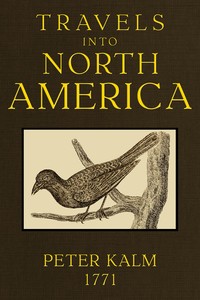
Travels into North America, Volume 2 (of 3) — Reading Notes
(0 User reviews)
1503
Project Gutenberg
2023
Not confirmed
Scientific expeditions; United States -- Description and travel -- Early works to 1800; Natural history -- United States; Canada -- Description and travel -- Early works to 1800; Natural history -- Canada
Readers of public-domain and historical texts
Project Gutenberg digital edition
en
Edition facts
Words
80,454
Reading time
350 min
Text sections
14
The source record for Travels into North America, Volume 2 (of 3) — Reading Notes measures this digital text at 80,454 words, 5 hr 50 min estimated reading time, and 14 detected text sections.
The text analysis averages about 17.0 words per sentence, while the detected sections provide another way to judge how the source is divided.
Project Gutenberg metadata also associates the work with “Scientific expeditions,” connecting these edition facts with the source record’s subject description.
Source:
Project Gutenberg record #72103
Pehr Kalm's 1748 journal, translated by Forster, blends natural history with sharp observations on colonial agriculture, population growth, and land use in New Jersey and Pennsylvania, revealing settlers' extractive practices and Kalm's frustration with their neglect of scientific husbandry.
Read the complete public-domain text at its original source.
Read on Project GutenbergPehr Kalm, a Swedish professor of economy, traveled through New Jersey and Pennsylvania in 1748, recording not only plants and soils but also the habits of settlers. This second volume of his travels opens with a visit to Raccoon, New Jersey, where he notes the rapid population growth: low taxes, abundant land, and personal liberty allow young couples to marry without fear of poverty. He supports this with examples from local families and newspaper extracts, counting generations of descendants. Yet Kalm’s interest soon shifts to agriculture, which he finds shockingly careless. The same settlers who multiply freely also exhaust their fields, abandoning them for fresh woodland rather than improving their methods.
Observations on Population and Liberty
Kalm begins with a demographic puzzle: why do people multiply more in North America than in Europe? His answer is economic. A young man can marry without fear of poverty because uncultivated land is cheap, taxes are low, and liberties are great. He illustrates this with Maons Keen, a Swede near Raccoon who could count forty-five living descendants. Kalm then cites two cases from the Philadelphia Gazette: Sarah Tuthil, who had sixteen children and saw 177 grandchildren and great-grandchildren, and Richard Buttington, whose assembled family numbered 115. These examples are not merely anecdotal; they serve as evidence for Kalm’s broader argument about the relationship between political freedom and population growth. He does not, however, explore the darker side of this expansion—the displacement of Indigenous peoples—which remains absent from these excerpts.
The Spoiled Settler and Imperfect Agriculture
Kalm is sharply critical of colonial farming. He argues that the ease of clearing virgin forest—where the soil lies “as loose between the trees as the best bed in a garden”—has spoiled European settlers. They adopt the Indian method of shifting cultivation: sow until the ground is exhausted, then move on. This, Kalm insists, has made agriculture “so imperfect” that one can learn nothing from English, Swedes, Germans, Dutch, or French settlers. He laments that the English nation, “so well skilled” in husbandry at home, is unrecognizable here. The settlers are “blind to futurity,” focused only on present gain. Kalm’s frustration is palpable; he sees daily opportunities to learn from their mistakes, but the inhabitants themselves remain indifferent to the science of natural history, which they dismiss as “a mere trifle.”
Natural Knowledge and Neglected Pastures
Kalm claims that with a small knowledge of natural history, the poorest ground could be turned into fertile meadow. He observed plants that horses and cows preferred—wild species that grew on dry, poor soil—but the inhabitants did not know how to use them. He was “astonished” to hear complaints about bad pastures while seeing excellent plants on the very same grounds, neglected by their owners. Kalm’s certainty is “founded upon experience,” yet he offers no specific plant names in these excerpts. His tone shifts from observation to moral reflection: he found everywhere “the wisdom and goodness of the Creator,” but seldom any acknowledgment among men. He closes this section with a Latin quotation from Virgil’s Georgics—O fortunatos nimium sua si bona norint, Agricolas!—implying that farmers are fortunate if they only knew their own good.
Kalm’s journal is not a systematic treatise but a traveler’s record, shaped by his training as a naturalist and his impatience with colonial waste. Readers should note that the excerpts here are drawn from the opening pages of the volume; later sections may offer more detailed botanical or economic data. The translator, Johann Reinhold Forster, adds occasional notes, but the voice remains Kalm’s—curious, critical, and convinced that science could improve daily life. Approach this volume as a primary source for eighteenth-century attitudes toward land, labor, and nature in the mid-Atlantic colonies.
Leafing through Kalm’s journal, I was struck by how restless those colonial farms felt—soil abandoned almost as soon as it was cleared. It made me think of A Narrative of the Life and Travels of Mrs. Nancy Prince — Story, Setting & Ideas, where movement wasn't a choice but a constant thread. Both records feel less like places pinned down, and more like footsteps briefly held in the earth, already fading.
There are no reviews for this eBook.
There are no comments for this eBook.
Reader reflection
Take a moment to reflect on this book
Create a short personal record of your experience with this book.
Your progress
0
/
10
2
Was reading this book enjoyable?
3
Would you encourage someone else to read it?
4
How demanding did the text feel?
5
How would you rate its originality?
6
Did this book create an emotional response?
7
How would you describe its reading pace?
8
How strong was your personal connection to the text?
9
What is the main idea you are taking away?
10