1

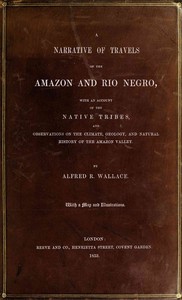
A narrative of travels on the Amazon and Rio Negro, — Text and Context
(0 User reviews)
981
Project Gutenberg
2023
Not confirmed
Natural history -- Amazon River Valley; Amazon River Valley; Brazil -- Description and travel; Indians of South America -- Amazon River Valley; Indians of South America -- Amazon River Valley -- Languages
Readers of public-domain and historical texts
Project Gutenberg digital edition
en
Edition facts
Words
161,162
Reading time
701 min
Text sections
26
A narrative of travels on the Amazon and Rio Negro, — Text and Context can be approached with a clearer sense of reading commitment from its source measurements: 161,162 words, 11 hr 41 min estimated reading time, and 26 detected text sections.
The text analysis averages about 28.2 words per sentence, while the detected sections provide another way to judge how the source is divided.
Project Gutenberg metadata also associates the work with “Natural history -- Amazon River Valley,” connecting these edition facts with the source record’s subject description.
Source:
Project Gutenberg record #71436
Wallace's narrative of his Amazon journey, blending natural history observations with ethnographic accounts of native tribes, based on journals and surviving notes after a shipwreck.
Read the complete public-domain text at its original source.
Read on Project GutenbergAlfred Russel Wallace opens his narrative with a frank account of his motives: a desire to see tropical wonders firsthand, spurred by Edwards's 'A Voyage up the Amazon.' He planned to fund the trip through natural history collections, a practical decision that shapes the book's dual focus on scientific observation and travel experience. The preface reveals that the first and last portions come from journals, while the middle chapters and final four on natural history and Indian tribes were reconstructed from fragmentary notes after a shipboard fire destroyed most of his materials. This loss gives the text an uneven texture—some passages vivid and immediate, others more generalized.
A Traveler's Practical Motives
Wallace states plainly that he broke 'through the trammels of business and the ties of home' to reach a tropical country. His attention was directed to Pará and the Amazon by Edwards's book, chosen for 'easiness of access' and relative obscurity. He proposed to pay expenses by making collections, a plan that succeeded. The preface thus establishes a practical, self-funded naturalist—not a wealthy explorer—whose narrative will blend personal impression with scientific purpose. The loss of two years' notes and most collections on the homeward voyage is mentioned without self-pity, only regret that the intended separate work on the Amazon's physical history could not be completed.
Upstream Travel and Its Discomforts
An excerpt describes the labor of ascending a flooded river: the crew pulled the canoe by 'bushes and creepers and tree-branches,' using hooked poles to push through difficult points. For miles they endured 'stinging and biting ants of fifty different species,' each producing 'its own peculiar effect, from a gentle tickle to an acute sting.' Wasps' nests hidden in leaves provoked furious attacks; the Indians' naked bodies offered no defense. High water meant few dry spots for fires, so days passed on farinha and water, with cold fish or pacova if lucky. Sleeping places were known to traders, and the party stopped whenever they reached one, regardless of hour.
Encountering a Native Malocca
On entering a narrow channel, Wallace reached a 'malocca,' or native Indian lodge—the first encountered. The building was substantial: near a hundred feet long, forty wide, thirty high, constructed of smooth barked timbers and thatched with Caraná palm leaves. Inside, a broad aisle formed by two rows of principal columns supported the roof; between these and the sides were smaller timbers, all bound with sipós. Short partitions of palm-thatch projected inward from the walls, 'exactly similar in arrangement to the boxes in a London eating-house, or those of a theatre.' Each was a private family apartment within a patriarchal community. The side aisles held common items: farinha ovens, tipitís for squeezing mandiocca, huge pans for caxirí. The centre aisle remained unoccupied, forming a fine walk.
Observations on Natural History and Loss
Wallace's natural history observations are interspersed with travel details. He notes a small 'Sucurujú' (anaconda) about a yard long, sunning on a bush; an Indian shot it with an arrow, and it was roasted for supper. Wallace found it 'excessively tough and glutinous, but without any disagreeable flavour,' and thought well stewed it would be very good. Such matter-of-fact descriptions of eating snake, or of ants and wasps as mere inconveniences, reveal a naturalist's mindset. The preface warns that the four last chapters on natural history and Indian tribes were written from fragmentary notes—a fact to keep in mind when reading them, as they may lack the journal's immediacy.
Because Wallace's materials were partly lost, the narrative shifts between firsthand journal entries and reconstructed accounts. Readers may notice a difference in detail between the opening and closing sections and the middle chapters. The book rewards attention to small observations—the feel of a paddle, the sting of an ant, the layout of a malocca—that together build a concrete sense of Amazon travel in the 1850s. Treat the later chapters on Indians and natural history as informed summaries rather than day-by-day records.
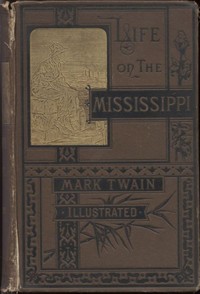
Reading Wallace’s account of the Amazon, I kept thinking how his river shaped his seeing—each bend revealing another village, another creature. It reminded me, quietly, of a different waterway, one I’ve often returned to in thought. Twain’s Mississippi carries that same sense of a moving world, observed at leisure. Life on the Mississippi — A Closer Reading feels like an old friend’s voice from a similar journey.
There are no reviews for this eBook.
There are no comments for this eBook.
Reader reflection
Record your reading impressions
A brief reflection can help important ideas stay with you longer.
Your progress
0
/
10
2
How much did you enjoy the reading experience?
3
How likely are you to recommend this book?
4
Did the language feel accessible?
5
How distinctive were its ideas or approach?
6
How clear did the writing feel?
7
Would you like to discuss this book with someone?
8
Which aspect of the book did you value most?
9
In one sentence, what did you learn?
10