1


Life on the Mississippi — A Closer Reading
(0 User reviews)
830
Project Gutenberg
2004
Not confirmed
Mississippi River -- Description and travel; Mississippi River Valley -- Social life and customs -- 19th century; Authors, American -- 19th century -- Biography; Pilots and pilotage -- Mississippi River; Twain, Mark, 1835-1910 -- Travel -- Mississippi River
Readers of public-domain and historical texts
Project Gutenberg digital edition
en
Edition facts
Words
151,774
Reading time
660 min
Text sections
21
Before opening Life on the Mississippi — A Closer Reading, the edition data offers a quick orientation: 151,774 words, 11 hr estimated reading time, and 21 detected text sections.
The text analysis averages about 21.1 words per sentence, while the detected sections provide another way to judge how the source is divided.
Project Gutenberg metadata also associates the work with “Mississippi River -- Description and travel,” connecting these edition facts with the source record’s subject description.
Source:
Project Gutenberg record #245
Mark Twain's account of his apprenticeship as a Mississippi River steamboat pilot, blending memoir, history, and tall tales. The narrative shifts from youthful ambition to technical mastery, then to post-war river decay, with a long interpolated revenge story.
Read the complete public-domain text at its original source.
Read on Project GutenbergTwain opens with a mock-heroic history of the Mississippi, noting that it “empties four hundred and six million tons of mud” and that De Soto “has the pull” over later explorers. The chapter titles themselves—full of capitalized nouns and wry asides—signal a voice that treats the river as both a subject of study and a source of comedy. The early chapters alternate between boyhood wonder at steamboats and the harsh realities of learning the river: a cub pilot must memorize every snag, sandbar, and current, and the pilot’s memory is described as “a universal grasp” that must hold “the shape of the river” in all conditions.
The Cub Pilot’s Education
The excerpts from Chapters VI through XIII show Twain’s apprenticeship under the exacting Mr. Bixby. The pilot-house is “gorgeous,” but the lessons are brutal. Bixby demands that the cub learn “the face of the water” so thoroughly that he can read it even in darkness. One memorable test has Bixby ordering “Back her for life!” when the boat is about to run aground—a command that reveals the split-second decisions required. Twain describes the process as “reason dethroned” because the pilot must override logic and rely on ingrained knowledge of shifting channels. The river is “bewitching” but also treacherous; the beauty of a sunset is undercut by the need to watch for “snags” and “sawyers.”
The Pilot’s World and Its Monopoly
Chapters XIV and XV detail the Pilots’ Benevolent Association, a tight monopoly that controls wages and licenses. Twain explains the “secret sign” used to identify members and the system of “crutches” that kept outsiders from learning the river. The association’s power is described with admiration: “an admirable system” that forced captains to pay high wages. Yet Twain also notes the tension between pilots and captains, and how the Civil War and railroads eventually broke the monopoly. This section grounds the romantic image of the pilot in economic reality—a world of “two-hundred-and-fifty-dollar speed” and fierce competition.
The River Transformed: Post-War Travel
Later chapters, after a long gap in time, find Twain returning to a Mississippi changed by war and railroads. The river is still there, but the steamboat culture has declined. Twain’s tone shifts from the eager cub to the nostalgic traveler. He notes cut-offs that have shortened the river and “ditching and sandbars” that make navigation different. The excerpts show him observing the landscape with a practiced eye, but the energy of the earlier pilot-house scenes is replaced by a more reflective, sometimes melancholy, survey of towns and people. The river itself remains a constant, but the world around it has moved on.
A Revenge Tale Embedded
One of the most striking excerpts is a long, self-contained narrative about a man who tracks his wife and child’s murderer using thumbprints. This story, told in the first person by a stranger, is a dark departure from the river memoir. The narrator disguises himself as a fortune-teller, takes thumbprints from soldiers, and compares them to a bloody print left at the murder scene. The method is based on an old French prison-keeper’s claim that thumb lines never change—a precursor to fingerprinting. This interpolation shows Twain’s willingness to pause the main narrative for a gothic tale, and it hints at the range of voices and genres he incorporates into the book.
Readers should note that Life on the Mississippi is not a single continuous narrative but a patchwork of memoir, history, anecdote, and fiction. The thumbprint story, for instance, appears without explicit connection to Twain’s own journey. The book rewards those who follow its digressions and shifts in tone, from the technical details of piloting to the tall tales of river characters. Pay attention to the chapter titles—they often contain the key to Twain’s ironic stance.
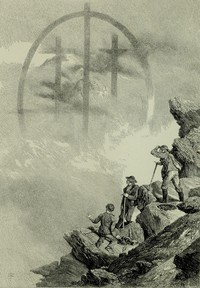
Somewhere between Mark Twain’s ache for a river he once knew by heart and the quiet patience of a traveler writing home, I found a shared soul. Both books hold the tremble of memory—places forever changed, yet held close. Our Letters from Switzerland and Travels in Italy — Edition Insights feels like the same warm hand, reaching back across time. They sit well together, whispering of distances.
There are no reviews for this eBook.
There are no comments for this eBook.
Reader reflection
What did you think of this book?
Answer a few questions and save a private reflection on this device.
Your progress
0
/
10
2
How much did you enjoy the reading experience?
3
Would you pass this book on to a friend?
4
What was the reading difficulty like?
5
How personally connected did you feel to the book?
6
Which aspect of the book did you value most?
7
Did you gain anything practical from the text?
8
Do you expect to return to this book?
9
What is the main idea you are taking away?
10