1

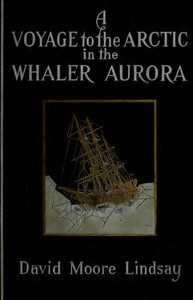
A Voyage to the Arctic in the Whaler Aurora — Reading Notes
(0 User reviews)
1507
Project Gutenberg
2016
Not confirmed
Arctic regions -- Description and travel; Whaling; Lindsay, David Moore, 1862- -- Travel -- Arctic regions; Lindsay, David Moore, 1862- -- Diaries; Aurora (Ship); Sealing; Whalers (Persons)
Readers of public-domain and historical texts
Project Gutenberg digital edition
en
Edition facts
Words
57,481
Reading time
250 min
Text sections
8
A Voyage to the Arctic in the Whaler Aurora — Reading Notes can be approached with a clearer sense of reading commitment from its source measurements: 57,481 words, 4 hr 10 min estimated reading time, and 8 detected text sections.
The text analysis averages about 20.8 words per sentence, while the detected sections provide another way to judge how the source is divided.
Project Gutenberg metadata also associates the work with “Arctic regions -- Description and travel,” connecting these edition facts with the source record’s subject description.
Source:
Project Gutenberg record #51910
A diary-based account of the 1884 Arctic voyage of the whaler Aurora, structured around daily entries and shifting scenes between shipboard life, ice navigation, and encounters with sealing and whaling grounds, with recurring attention to the movement of ice and the routines of the crew.
Read the complete public-domain text at its original source.
Read on Project GutenbergDavid Moore Lindsay’s account of the 1884 voyage of the whaler Aurora is built around dated diary entries that track the ship’s progress through ice-choked waters. The narrative moves between the confined deck of the vessel—where the carpenter, cooper, sailmaker, and blacksmith each have their stations—and the vast, shifting seascape of floes and bergs. Lindsay repeatedly notes the position of other whalers such as the Bear, Narwhal, and Cornwallis, creating a sense of a small fleet navigating together. The structure is episodic, with each day bringing a new location or task, from shooting looms to dodging the “terrible middle pack.”
Daily Entries as Structural Backbone
The diary format gives the book a rhythm of observation and action. Each dated entry begins with a weather or ice report, then moves to the day’s events: “May 28th. Wednesday. We had a day racing with the Bear.” This pattern allows Lindsay to compress weeks of slow ice navigation into a series of discrete scenes. The entries vary in length—some record only a few lines of progress, others expand into set pieces like the description of a berg “ploughing its way through a frozen sea.” The structure mirrors the uncertainty of Arctic travel, where each day could bring a new lead or a sudden besetment.
Recurring Images of Ice and Movement
Ice is not a static backdrop but an active force. Lindsay describes floes “crunching into each other” under “irresistible forces,” and bergs that “slowly but surely” overcome obstacles. The ship is often “hooked on to the floe” at night, a temporary stillness that contrasts with the constant motion of the pack. The narrative repeatedly returns to the danger of uncharted rocks and the need for a native pilot to “point out the way.” These images create a world where movement is precarious, and the ship’s progress is measured in miles gained or lost against the ice.
Shifting Between Shipboard and Landscape
Lindsay alternates between the confined, orderly world of the Aurora and the vast, dangerous environment outside. On deck, the crew is shown at specific tasks: “the carpenter and his assistant were found at work in one place, the cooper busy in another.” Meals are served “with such regularity” that danger becomes abstract until a berg looms. This contrast is sharpest in Melville Bay, where Lindsay recalls Cheyne’s account of dangers while noting the ship’s comfort. The movement between these scales—from the blacksmith’s forge to the “hundreds of islands of all sizes and shapes”—gives the book a layered geography.
The Fleet as a Moving Community
Other whalers appear frequently, creating a sense of shared passage. The Bear races the Aurora to a floe; the Cornwallis “kept near us all day”; the Narwhal joins for shooting excursions. These encounters break the isolation of the voyage and provide benchmarks for progress. Lindsay also notes the Greely Relief ships, which “were with the whalers during the passage to Cape York.” The fleet functions as a loose convoy, each ship visible on the horizon, their movements tracked in the diary as carefully as the ice itself.
Readers should approach this book as a record of process rather than plot. The diary entries reward attention to small details—the taste of loom “rather like roast hare,” the sight of a berg grounding, the names of islands that appear and vanish. Lindsay’s voice is that of a young observer, not an expert, which gives the account a freshness even when the ice seems endless. The appendix and chapter on the Chieftain disaster offer a wider context, but the core of the book remains the daily negotiation between ship, ice, and crew.
That rainy afternoon, the Aurora’s log of grinding ice and slow, patient crew felt like a kind of waiting—the same waiting James Bruce must have known beside the Nile’s source. Somehow, one silence led to another, and I found myself in his Travels to Discover the Source of the Nile, Volume 3 (of 5) In the years 1768, 1769, 1770, 1771, 1772 and 1773 — A Reader’s Guide, trading ice for heat, yet not really leaving.
There are no reviews for this eBook.
There are no comments for this eBook.
Reader reflection
Before you leave, reflect on the book
Use these questions to collect your thoughts before moving on.
Your progress
0
/
10
2
How did the book work for you overall?
3
Is this a title you would suggest to others?
4
How much effort did this book require?
5
Did the story or argument move comfortably?
6
How strongly did the book affect you emotionally?
7
How clear did the writing feel?
8
Did the book give you something worth debating?
9
What did this book teach you most?
10