1

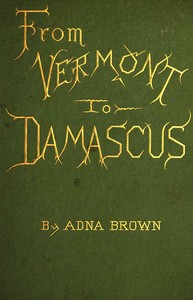
From Vermont to Damascus — Reading Companion
(0 User reviews)
862
Project Gutenberg
2025
Not confirmed
Italy -- Description and travel; Egypt -- Description and travel; Palestine -- Description and travel; London (England) -- Description and travel; Greece -- Description and travel; Paris (France) -- Description and travel; Turkey -- Description and travel
Readers of public-domain and historical texts
Project Gutenberg digital edition
en
Edition facts
Words
60,193
Reading time
262 min
Text sections
18
The source record for From Vermont to Damascus — Reading Companion measures this digital text at 60,193 words, 4 hr 22 min estimated reading time, and 18 detected text sections.
The text analysis averages about 19.7 words per sentence, while the detected sections provide another way to judge how the source is divided.
Project Gutenberg metadata also associates the work with “Italy -- Description and travel,” connecting these edition facts with the source record’s subject description.
Source:
Project Gutenberg record #76336
Adna Brown's 1895 travelogue traces a Vermont pastor's journey from Italy to Damascus, blending biblical references, practical travel advice, and observations of local customs, with a focus on the Holy Land.
Read the complete public-domain text at its original source.
Read on Project GutenbergAdna Brown begins his 1895 travelogue by contrasting Vermont's harsh winter with the allure of sunny Italy, framing the journey as an escape from Jack Frost's "nightly carnivals." He joins Dr. A. E. Dunning's Oriental tour, and the preface notes the book originated from letters compiled at friends' urging, supplemented with illustrations and practical hints for travelers. The opening establishes a personal, epistolary tone that persists throughout.
From Vermont to the Mediterranean
The opening chapters trace Brown's departure from New England and his first impressions of Italy. He describes the Falls of Tivoli and the groves of orange and lemon trees, emphasizing the sensory contrast with Vermont. The narrative is grounded in specific details: the "clarion trumpet" of Dr. Dunning's call, the itinerary through Italy, Egypt, and the Holy Land. Brown's voice is direct, often noting practical matters like currency and accommodations, which he later compiles in a "Useful Hints" section. The early letters set a pattern of blending personal reflection with descriptive travelogue, though the excerpts do not reveal how much time he spent in each location.
Egypt and the Holy Land
In Egypt, Brown observes ploughing methods and the role of dragomans like Hasham, noting the "water bottles and filters" used by locals. His descriptions of the Holy Land are interwoven with biblical references: he visits sites connected to Paul's conversion and the Jews' Wailing-place. The narrative includes encounters with Bedouins and veiled women, often with a tone of curiosity. Brown's perspective is that of a Protestant minister, yet he refrains from overt sermonizing, instead recording what he sees. The excerpts show a pattern of moving from general impressions to specific anecdotes, such as the difficulty of crossing the Jordan or the appearance of the Sheik El Sadath.
Damascus: A City of Contrasts
Brown's arrival in Damascus is marked by a striking simile: entering the city is "like going into the maze at Monterey, in California." He describes the walls of clay and stone, the silver-leaf poplars, and the abundance of fruit trees, quoting Mohammed's saying that Damascus is paradise. Yet he also notes the city's violent history, including the 1860 massacre of Christians. The street called Straight, he observes, was not straight but "the nearest to the line and plummet of any street." His account of the Grand Hotel Besraoui includes the "needle eye" door and a marble-paved court with a fountain, blending practical travel details with historical and biblical references.
Practical Observations and Local Customs
Throughout the letters, Brown pays close attention to everyday life. In Damascus, he notes the abundance of dogs, which it is illegal to kill, and the fine residences with rooms costing fifty thousand dollars. He describes the water supply from the river Abana, carried through a canal "some sixty feet wide." The narrative includes details about veiled women, Turkish ladies, and the "Beef-eaters" in Scotland. Brown's observations are often quantitative—he counts mosques, inhabitants, and dogs—giving the account a factual, almost ethnographic quality. The excerpts suggest a traveler who is both a pilgrim and a tourist, interested in both biblical sites and contemporary customs.
Brown's narrative moves from Italy to Damascus and back via Beyrout, Smyrna, Ephesus, Athens, Constantinople, Budapest, Vienna, Paris, Scotland, and England, as the title promises. The letters maintain a consistent voice: personal, observant, and occasionally wry. Readers should approach this work as a period travelogue that values concrete detail over introspection, and as a document of how a late-19th-century American Protestant experienced the Mediterranean world.
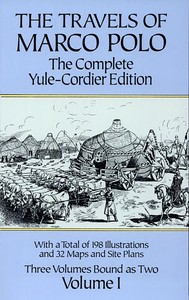
That old Vermont pastor in 1895 kept pausing in Damascus to note how a place holds layers of stories we didn't expect. It reminded me of sitting with The Travels of Marco Polo — Volume 1 — A Closer Reading, where the wonder isn’t just the road, but how the traveler quietly changes around it. Both feel like company rather than instruction.
There are no reviews for this eBook.
There are no comments for this eBook.
Reader reflection
Take a moment to reflect on this book
Create a short personal record of your experience with this book.
Your progress
0
/
10
2
What was your overall reaction to the book?
3
Would you encourage someone else to read it?
4
How demanding did the text feel?
5
Did it raise ideas you would like to talk about?
6
Did anything about the book feel genuinely new?
7
How much did the book move you?
8
Would a second reading be valuable?
9
In one sentence, what did you learn?
10