1

The Travels of Sir John Mandeville — Inside the Classic
(0 User reviews)
2676
Project Gutenberg
1997
Not confirmed
Voyages and travels -- Early works to 1800; Mandeville, John, Sir -- Travel; Geography, Medieval; Palestine -- Description and travel -- Early works to 1800; Orient -- Description and travel -- Early works to 1800
Readers of public-domain and historical texts
Project Gutenberg digital edition
en
Edition facts
Words
87,568
Reading time
381 min
Text sections
7
Before opening The Travels of Sir John Mandeville — Inside the Classic, the edition data offers a quick orientation: 87,568 words, 6 hr 21 min estimated reading time, and 7 detected text sections.
The text analysis averages about 25.6 words per sentence, while the detected sections provide another way to judge how the source is divided.
Project Gutenberg metadata also associates the work with “Voyages and travels -- Early works to 1800,” connecting these edition facts with the source record’s subject description.
Source:
Project Gutenberg record #782
An editorial note on the language, narrative voice, and shifts in pace in Mandeville's Travels, based on the Cotton manuscript version, with observations on the diamond passage's rhythm and the catalog-like structure.
Read the complete public-domain text at its original source.
Read on Project GutenbergThe Cotton manuscript version of Mandeville's Travels opens with a direct, first-person narrator who claims to have seen what he describes. The voice is confident, often using phrases like "I have often-times assayed" to assert personal experience. Yet the text quickly reveals a habit of compiling and synthesizing sources, blending empirical claims with inherited lore. The diamond passage, for instance, shifts from a mineralogical catalog to a moral and magical treatise, illustrating how the narrative voice oscillates between traveler and compiler.
The Compiler's Voice
The narrator presents himself as an eyewitness, but the text's structure betrays a compiler at work. In the diamond section, he moves from describing where diamonds are found (Ind, Arabia, Cyprus, Macedonia) to their properties, then to their virtues, citing The Lapidary as an authority. The phrase "as men may find in The Lapidary that many men know not" distances the narrator from direct knowledge, while "as they beyond the sea say and affirm" invokes a collective wisdom. This layering of sources creates a voice that is both authoritative and derivative, a hallmark of the work's hybrid nature.
Rhythm and Accumulation
The prose often proceeds by accumulation, listing places, types, and virtues in a paratactic style. For example, the description of diamonds includes a series of clauses beginning with "And": "And they be square and pointed... And they grow together, male and female. And they be nourished with the dew of heaven." This additive rhythm mimics oral delivery and gives the text a measured, incantatory quality. However, the pace shifts abruptly when the narrator turns to practical advice, such as wearing the diamond on the left side for greater virtue. These shifts from the marvelous to the instructional create a distinctive, uneven tempo that keeps the reader engaged.
Catalog as Narrative Strategy
The work frequently adopts a catalog form, grouping items by type or origin. In the diamond passage, the catalog includes geographical distribution (Ind, Arabia, Cyprus, Macedonia), physical characteristics (color, hardness, shape), and even gendered growth ("male and female"). This structure allows the narrator to impose order on a vast, heterogeneous world. Yet the catalog is not static; it often morphs into narrative, as when the diamond's virtues are listed in a sequence that reads like a protective charm. The effect is a text that feels both encyclopedic and personal, a guidebook that doubles as a wonder book.
Readers should attend to the shifts between the narrator's claims of firsthand experience and his reliance on textual authorities. The Cotton manuscript's version, with its restored phrases, offers a clearer view of these transitions. Noting when the prose slows into catalog or quickens into anecdote can reveal the work's underlying logic: a medieval mind trying to contain the world within a single, authoritative voice.
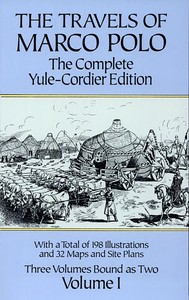
The rain kept time with the Cotton manuscript’s rhythms, its diamond passage a sudden glitter amid catalog-like lists. I found myself lingering on that same unhurried voice, then wondering how Marco Polo’s drier observations might feel beside it. Hours slipped by until, almost without deciding, I reached for The Travels of Marco Polo — Volume 1 — A Closer Reading beside the window.
There are no reviews for this eBook.
There are no comments for this eBook.
Reader reflection
How will you remember this book?
Save your reaction, strongest insight, and memorable passage.
Your progress
0
/
10
2
Was reading this book enjoyable?
3
Would you pass this book on to a friend?
4
How demanding did the text feel?
5
Could you follow the author’s main argument?
6
How did the reading compare with what you expected?
7
How original did the book feel?
8
Would you like to discuss this book with someone?
9
Which lesson or insight stayed with you?
10